Land Dialogue and Independent Mediation
Socfin Group Approach – Cambodia, Cameroon & Sierra Leone
Group framework and principles
In several countries where the Socfin Group operates, legacy land situations, sometimes long-standing and complex, have given rise to tensions with neighboring or Indigenous communities.
In response to these situations, the Group has made a strategic choice to prioritize:
- Structured dialogue,
- Independent mediation processes,
- Cooperation with public authorities,
- And sustainable solutions, rather than confrontation.
This approach is now fully embedded in the Group’s social and environmental governance and forms part of our commitments to due diligence, respect for human rights and regulatory compliance, as well as our long-term strategy.
Cambodia – Independent mediation in the Commune of Bousra (2018 to present)
Timeline
- 2016–2017: Pre-mediation phase (capacity building and engagement with local communities)
- 2018–2021: Mediation process
- 2018 to present: Implementation of mediation outcomes
Context
In 2009 and 2010, the Cambodian State granted several Economic Land Concessions (ELCs) to Socfin-KCD in the commune of Bousra, Mondulkiri Province. Subsequently, in 2013, a third ELC was granted to Coviphama. These concessions partially overlapped with areas traditionally used by the Bunong Indigenous communities.
This situation led to land-related disputes, which were widely publicized, and to persistent misunderstandings between the parties.
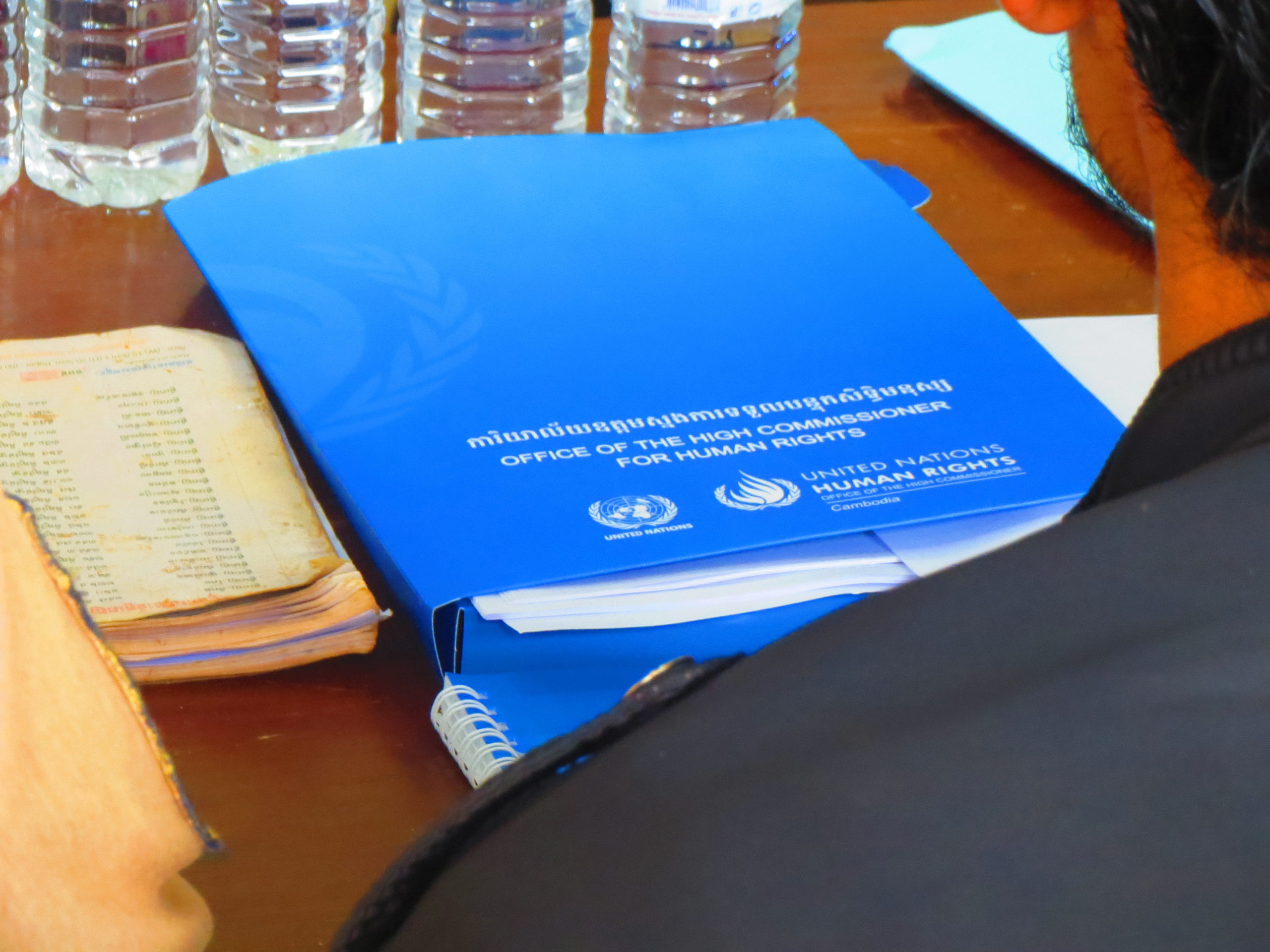
The CLAIM Mediation Process (Cambodian Land Dispute Independent Mediation), supervised by the Office of the United Nations High Commissioner for Human Rights (OHCHR)
In 2016, an independent mediation process was launched with the support of the Mekong Region Land Governance (MRLG) program.
The mediation was conducted by the Independent Mediation Group (IMG), with the participation of local authorities and the support of the Office of the United Nations High Commissioner for Human Rights (OHCHR).
5 of the 7 Bunong communities participated directly in the process: Pu Teut, Pu Raing, Bousra, Pu Char and Pu Lu. The 6th community did not hold land within the concession area, and the seventh chose to pursue judicial proceedings. The CLAIM Mediation Evaluation Report (MRLG, 2022) describes this process as:
“…one of the most advanced examples of land mediation involving Indigenous communities and a private company in Southeast Asia.”
Final agreement and implementation
The process resulted in the signing of 26 agreements and the publication of a Joint Statement on 27 September 2022 by all stakeholders, formalizing in particular:
- Support for the registration of collective community land located within the Group’s ELCs;
- Recognition and protection of Bunong sacred forests and cultural sites;
- Maintenance of traditional agricultural practices in areas along waterways;
- A negotiated resolution of legacy situations related to Family Rubber Plantations (FRP);
- Construction of infrastructure (roads, wells);
- Establishment of community development projects, subject to independent monitoring (MRLG field visit in July 2025).
The MRLG report highlights a significant reduction in tensions, a restoration of trust, and the creation of a replicable model for the region.
Today, the commitments arising from this agreement continue to be implemented and constitute the reference framework for local relations.
**********
Cameroon – Land tenure review and coexistence with neighboring communities (since 2017)
Timeline
- 2017: Establishment of a working group tasked with conducting an audit
- 2018–2021: Cadastral assessments
- 2021 – present: Eséka and Dibombari implemented. Ongoing implementation for other sites.
Context
In Cameroon, Socapalm plantations operate under emphyteutic leases concluded with the State. Some of these leases, partly inherited from periods prior to privatisation, have resulted over time in irregular occupations, encroachments and conflicts of use, particularly in non-cultivated areas.
State-led institutional process
In 2017, at Socapalm request, the Ministry of State Property, Surveys and Land Tenure (MINDCAF) established a working group, later transformed into a technical committee, tasked with auditing the land tenure situation and proposing sustainable solutions in collaboration with local communities.
This process includes in particular:
- Cadastral assessments realized site-by-site (2018–2021);
- Redefinition and demarcation of concession boundaries;
- Progressive reduction of concession areas in order to release land occupied by third parties;
- Administrative regularisation of certain situations (land titles, provisional concessions);
- Strengthened dialogue with local authorities and neighbouring communities.
The works have now been completed or are in the finalisation phase depending on the site (Edéa, Kienké, Mbongo, Mbambou, Dibombari, Eséka).
Objectives of the Cameroonian process:
- Clarify land rights and sustainably reduce disputes through open and transparent dialogue;
- Promote peaceful coexistence with neighbouring communities;
- Secure existing agricultural operations from a legal standpoint;
- Align concessions with actual land occupation and current regulatory requirements.
This process is led by the competent Cameroonian public authorities and follows an institutional, progressive and regulated approach.
**********
Sierra Leone – Institutionalized community dialogue through a Memorandum of Understanding
Context
In Sierra Leone, relations with neighboring communities in Malen Chiefdom (Pujehun District) have been strengthened through a Memorandum of Understanding (MoU) concluded between our subsidiary Socfin Agricultural Company (SAC) and the Malen Development Committee, with the involvement of the Government of Sierra Leone.
The agreement was designed to formalize dialogue mechanisms and establish a structured framework for cooperation between the Company, community representatives and public authorities, following several years of tensions relating to land use and development expectations.
Memorandum of Understanding (MoU)
The MoU establishes a number of governance and development mechanisms aimed at strengthening cooperation and improving transparency, including:
- the creation of a community development framework linked to the performance of the plantation, designed to support local infrastructure, education and healthcare initiatives;
- commitments to strengthen transparency and accountability in the allocation of development resources;
- the establishment of a structured platform for regular dialogue and grievance resolution between the Company, community representatives and government stakeholders.
Long-term dialogue and cooperation
By formalizing these commitments and clarifying cooperation mechanisms, the agreement provides a stable institutional framework for relations between the plantation and surrounding communities.
It also contributes to strengthening dialogue, improving mutual understanding and supporting long-term conflict prevention, while promoting shared development objectives within Malen Chiefdom.
**********
Common Approach and Group Commitments
Whether in Cambodia, Cameroon and in Sierra Leone, the Socfin Group’s approach is based on common principles:
- Dialogue rather than confrontation;
- Use of independent or institutional conflict-resolution mechanisms;
- Respect for the cultural and social rights of communities;
- Search for long-term solutions;
- Transparency and traceability of processes;
- Alignment with international standards, including:
- The European Union Deforestation Regulation (EUDR),
- Human rights due diligence principles,
- The Roundtable on Sustainable Palm Oil (RSPO),
- And the standards of the International Organization for Standardization (ISO).